
Description
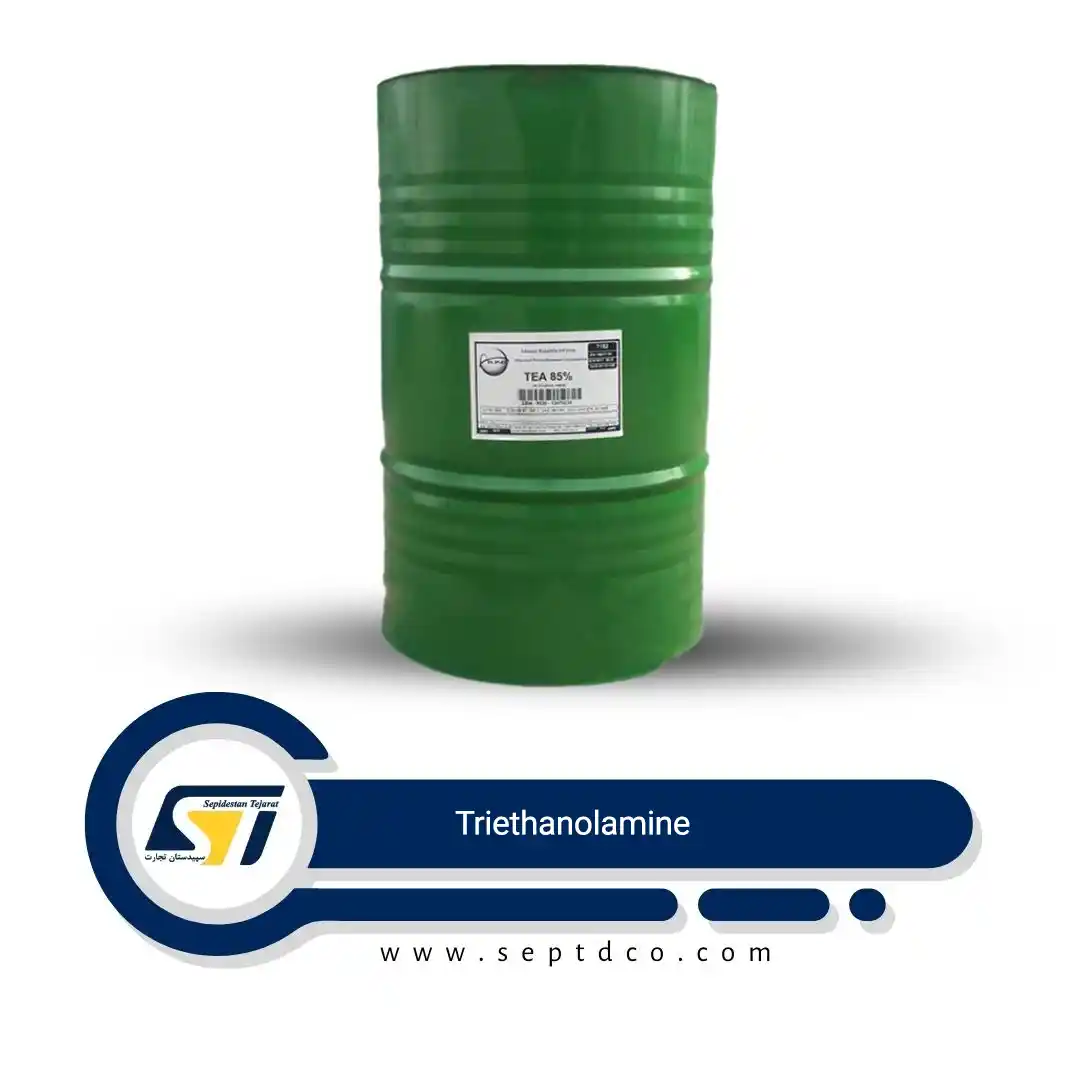
Triethanolamine is a widely used chemical compound with unique properties, playing roles in various industries ranging from detergents and personal care to cement additives and lubricants. This compound exhibits alkaline properties and, due to its hydroxyl groups, shows multifunctional chemical reactivity. Sepidestan Tejarat, with years of experience in supplying chemical raw materials, offers high-quality TEA with standard packaging and certified analysis to customers across the country. For purchasing triethanolamine (buy TEA), please contact our sales experts.
Price of Triethanolamine in the Iranian Market
The domestic price of TEA is influenced mainly by:
- Currency fluctuations: Since a large portion of the country’s demand is met via imports, the US dollar exchange rate directly affects its price.
- Supply and demand: During peak seasons for detergents or construction, demand rises, which typically increases the price.
Produced at Shazand Petrochemical, TEA is a reliable choice for detergent and cosmetic industries, lubricants, and cement additives. Currently, the price of each kilogram of Shazand TEA in 220-liter drums is reported between 95,000 to 120,000 Iranian Tomans, though market fluctuations may vary this. For the latest Shazand TEA price, availability, and purchasing conditions, contact Sepidestan Tejarat’s sales specialists. All shipments come with certified analyses and standard industrial packaging.
Advantages of Buying TEA from Sepidestan Tejarat
Sepidestan Tejarat, with access to reputable international sources and cooperation with trusted importers and suppliers, offers TEA in bulk with:
- Guaranteed quality and legitimate analysis reports
- Competitive pricing compared to the market
- Fast delivery throughout Iran
- Technical consultation for correct product selection and use
- Continuous supply capability for production lines and factories
Chemical Formula and Structure
TEA has the molecular formula:
C6H15NO3\mathrm{C_6H_{15}NO_3}
and is classified as a tertiary amine. It is produced through multiple steps by reacting ethylene oxide with ammonia. Its molecular structure includes one nitrogen atom and three hydroxyl groups, which provide high chemical activity in reactions.
Physical and Chemical Properties (Based on TDS)
| Property | Value |
|---|---|
| Physical State | Clear liquid, colorless to pale yellow |
| Odor | Mild, amine-like |
| Density (at 20°C) | 1.126 g/cm³ |
| Boiling Point | About 335 °C |
| Melting Point | About 21 °C |
| Viscosity | High, similar to glycerin |
| Solubility | Completely soluble in water, ethanol, and methanol |
| pH (1% solution) | About 10 to 11.5 |
Industrial Applications of TEA
This multifunctional compound finds usage in various industries:
1. Production of Detergents and Personal Care Products
TEA is a key ingredient in shampoos, liquid soaps, shaving foams, and cosmetic creams. It acts as a pH regulator and emulsifier, helping product stability and softness.
2. Cement Additives
In construction, TEA is used as a Cement Grinding Aid (CGA) to prevent particle adhesion to equipment, increasing efficiency in grinding processes.
3. Industrial Detergents and Degreasers
In alkaline formulations such as degreasers, scale removers, and anti-rust agents, TEA stabilizes formulations and enhances cleaning power.
4. Metalworking Lubricants
TEA acts as a coolant and corrosion inhibitor in lubricants used for machining processes.
5. Agriculture and Pesticide Production
It is used as an emulsifier or solvent in some pesticide formulations.
Packaging and Supply Form
Sepidestan Tejarat supplies TEA in two common packaging types:
- 220-liter metal or plastic drums weighing about 245 kg net
- 1000-liter tankers (IBC) for large consumers
All shipments come with a Certificate of Analysis (COA) and standard industrial packaging.
Global Market and Supply Status
TEA is produced by companies including:
- Dow Chemical (USA)
- BASF (Germany)
- Huntsman
- INEOS
- Several Asian companies such as SINOPEC
Asia is the largest consumer of TEA, while the USA and Europe hold significant shares of global production. The global market has shown steady growth due to increased demand for detergents and personal care products.
Factors Influencing Price Fluctuations
Global TEA prices are usually reported per metric ton (MT), ranging from 1300to1300 to 1800 depending on origin and destination. Influencing factors include:
- Prices of ethylene and ethylene oxide (raw materials)
- Transportation costs
- Sanctions and export restrictions in some countries
- Rising energy costs
Safety and Storage Recommendations
- Store TEA in tightly sealed containers in dry, cool places away from direct sunlight.
- Contact with skin or eyes may cause irritation; use gloves and safety glasses.
- During transport, avoid leaks or mixing with acidic materials.
Technical Notes on Usage and Purchase
While widely used, TEA dosages must be carefully controlled.
- In detergents, excessive use may irritate the skin, so precise formulation is essential.
- In cement, the correct ratio is key for grinding efficiency.
TEA, with its unique chemical features, plays a crucial role across various industries. From daily detergents to industrial additives, it is a fundamental compound in specialized formulations. Due to the importance of quality and price, choosing a reliable supplier is critical.
Sepidestan Tejarat, with a professional history in chemical supply and import, is ready to cooperate with factories and industrial firms to supply guaranteed quality TEA.
For chemical purchases, updated pricing, analysis sheets, and expert consultation, contact our sales department.
Reviews
There are no reviews yet.