

Description
Sodium Tripolyphosphate (STPP) is an important and widely used chemical compound utilized in many industries as an emulsifier, cleaning agent, and stabilizer. Due to its unique properties, it is commonly applied in food processing, detergents, electroplating, water treatment, and several other industrial sectors.
For purchasing Sodium Tripolyphosphate (STPP) from brands such as Sandia and other reputable manufacturers, you can contact the sales experts at Sepidestan Tejarat.
Technical Specifications
| No. | Property | Description |
|---|---|---|
| 1 | Chemical Name & Formula | Sodium Tripolyphosphate (STPP), Na₅P₃O₁₀ |
| 2 | Appearance | White crystalline or granular powder, odorless |
| 3 | Solubility | Completely soluble in water; produces an alkaline solution; acts as a water softener |
| 4 | Chemical Properties | Alkaline, stable under normal conditions, hygroscopic, reactive with acids |
| 5 | Industrial Applications | Detergent additive, water softener in detergents, catalyst, additive in ceramics and paints |
| 6 | Food Applications | Food additive (E451) used for moisture retention and texture improvement in meat, seafood, and cheese |
| 7 | Safety | May cause irritation if in contact with skin or eyes; use gloves and safety goggles |
| 8 | Storage & Transportation | Store in a cool, dry place away from moisture and direct sunlight; proper packaging recommended |
Sodium Tripolyphosphate Sandia Price
The price of STPP depends on several factors including product quality, purchase quantity, and global chemical market conditions. In the Iranian market, prices may fluctuate due to both domestic production and imported supply.
For the latest price, official quotation, and product analysis, it is recommended to contact Sepidestan Tejarat, a trusted supplier offering competitive pricing and reliable product quality.
Food Grade Sodium Tripolyphosphate
In the food industry, STPP (E451) is used as a food additive. It functions as a preservative, emulsifier, and moisture-retaining agent in products such as:
- Canned foods
- Seafood products
- Processed meats
- Some dairy products
It also improves solubility and flavor stability in certain food products. When used within regulated limits and under food safety supervision, it is considered safe. However, excessive consumption may cause digestive issues or other health concerns.
Applications of Sodium Tripolyphosphate
STPP is widely used across various industries:
Detergent Industry
Used as a water softener and emulsifier in the production of laundry detergents, dishwashing liquids, and other cleaning products.
Water Treatment
Acts as a stabilizing agent to prevent mineral scale formation and improve water quality.
Food Industry
Used for stabilization, improved solubility, and prevention of food spoilage.
Electroplating Industry
Improves coating adhesion and helps prevent corrosion during metal plating processes.
Textile Industry
Used in dyeing and finishing processes to improve color quality and prevent color back‑staining.
Role of STPP in the Detergent Industry
Sodium Tripolyphosphate is one of the most important chemicals used in detergent formulations.
Water Softening
One of the key properties of STPP is its ability to soften hard water. It binds calcium and magnesium ions, which improves detergent performance and foam formation.
Improved Cleaning Power
As an emulsifier and dispersing agent, STPP helps remove grease and oil from surfaces and fabrics, significantly enhancing cleaning efficiency.
Prevention of Mineral Deposits
STPP prevents the formation of mineral deposits on fabrics and dishes, reducing white residues and dullness.
Product Stability
It acts as a stabilizer in detergent formulations, ensuring that ingredients remain evenly distributed and preventing unwanted chemical reactions during storage.
Difference Between Light and Heavy STPP
STPP is generally classified into light and heavy types based on density and physical structure.
Light STPP (Low Density)
Characteristics
- Lower density
- Rapid solubility in water
- Simpler particle structure
Applications
- Laundry detergents
- Dishwashing liquids
- Household cleaning products
Advantages
- Faster dissolution
- More economical for detergent production
Heavy STPP (High Density)
Characteristics
- Higher density
- Slower dissolution rate
- More compact particle structure
Applications
- Industrial detergents
- Specialized chemical formulations
- Textile processing
Advantages
- Longer reaction time
- Suitable for heavy-duty industrial formulations
Potential Risks of Sodium Tripolyphosphate
Although widely used, excessive exposure or consumption of STPP may lead to certain health and environmental concerns.
High intake may cause:
- Digestive disturbances
- Kidney-related issues in sensitive individuals
Environmentally, excessive phosphate release may contribute to water pollution and eutrophication.
Alternatives to Sodium Tripolyphosphate
Due to environmental and health concerns, some industries are exploring alternatives such as:
- Sodium citrate
- Polyacrylates
- Mineral phosphates
These substitutes may provide similar functionality but sometimes at higher cost or lower efficiency depending on the application.
Sodium Tripolyphosphate Production in Iran
Several manufacturers in Iran produce STPP for industries such as detergents and food processing. These producers manufacture the product according to international standards and supply both domestic and export markets.
For purchasing Sodium Tripolyphosphate from domestic or imported sources, you can contact Sepidestan Tejarat, a reliable supplier offering high-quality materials at competitive prices.
Production Process of Sodium Tripolyphosphate
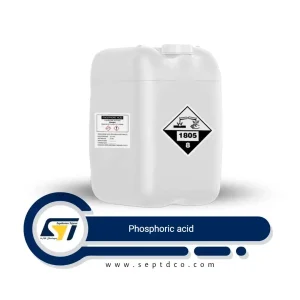
STPP is typically produced through a chemical reaction between sodium hydroxide (NaOH) and phosphoric acid (H₃PO₄).
During the production process:
- Phosphoric acid reacts with sodium compounds.
- Intermediate phosphate salts are formed.
- The material is heated and condensed to produce sodium tripolyphosphate.
- The final product is dried and processed into powder or granules for industrial use.
For purchasing chemical raw materials and industrial solvents, please contact the sales department of Sepidestan Tejarat for updated prices, technical consultation, and product analysis documents.
Reviews
There are no reviews yet.